28 July 2026
Fish: the indispensable link between benthic life and birds
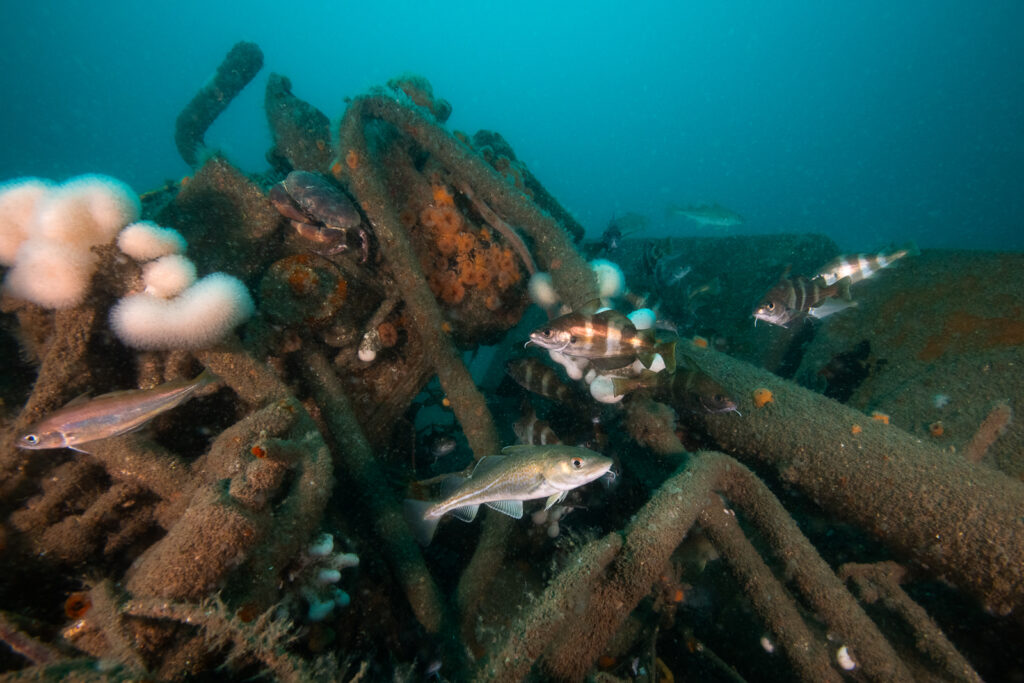
North Sea nature is under strain. To restore a resilient and healthy North Sea with room for sustainable use, we aim to rebuild biodiversity. Nature Regeneration North Sea does this by strengthening birds, fish, and benthic life. These are broad categories, so which species are we talking about? Why does Nature Regeneration North Sea focus on these groups, and how does one strengthen them in practice? In a series of three articles, experts answer these questions. In this one, Sam Hidskes, lead for the various fish projects, talks about North Sea fish.
Which role do fish play within the North Sea ecosystem?
“Fish are the link between benthic life and birds: they eat and are eaten. And they create enormous variation in biodiversity. Fish form a broad group within the food web: they live in every layer of the sea, from the seabed to the surface, and they range from very small to very large. From tiny plankton feeders to giant sharks — they’re all fish. Together with benthic life and birds, they form a tightly interwoven and dynamic ecosystem.”
What do we know about fish from scientific research?
“Fish are the link between benthic life and birds: they eat and are eaten. And they create enormous variation in biodiversity. Fish form a broad group within the food web: they live in every layer of the sea, from the seabed to the surface, and they range from very small to very large. From tiny plankton feeders to giant sharks — they’re all fish. Together with benthic life and birds, they form a tightly interwoven and dynamic ecosystem.”
On which specific fish species does Nature Regeneration North Sea focus?
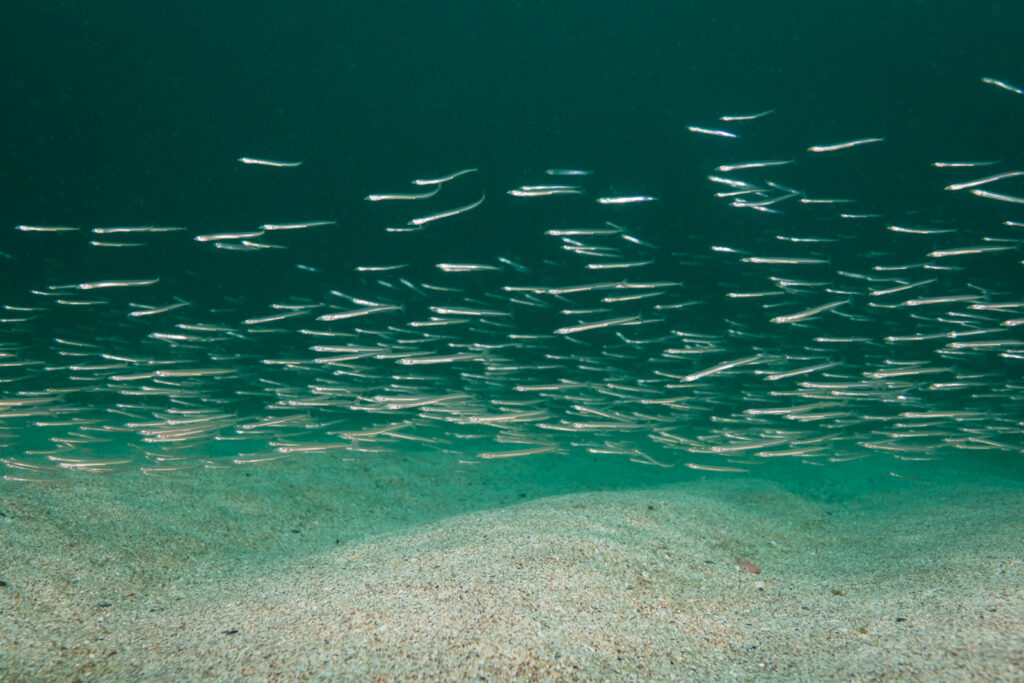
“We distinguish fish in several categories: from bottom-dwellers to surface species, from migratory fish to sharks and rays. In the program, we specifically focus on pelagic fish, the species that live in the upper layer of the sea, such as herring, anchovy, sand eel, and sprat. These are true keystone species in the North Sea ecosystem: they form the connection between plankton and larger fish, seabirds, and marine mammals. Without this middle layer, a large part of the system collapses.”
How do current fish numbers compare to those of about a century ago?
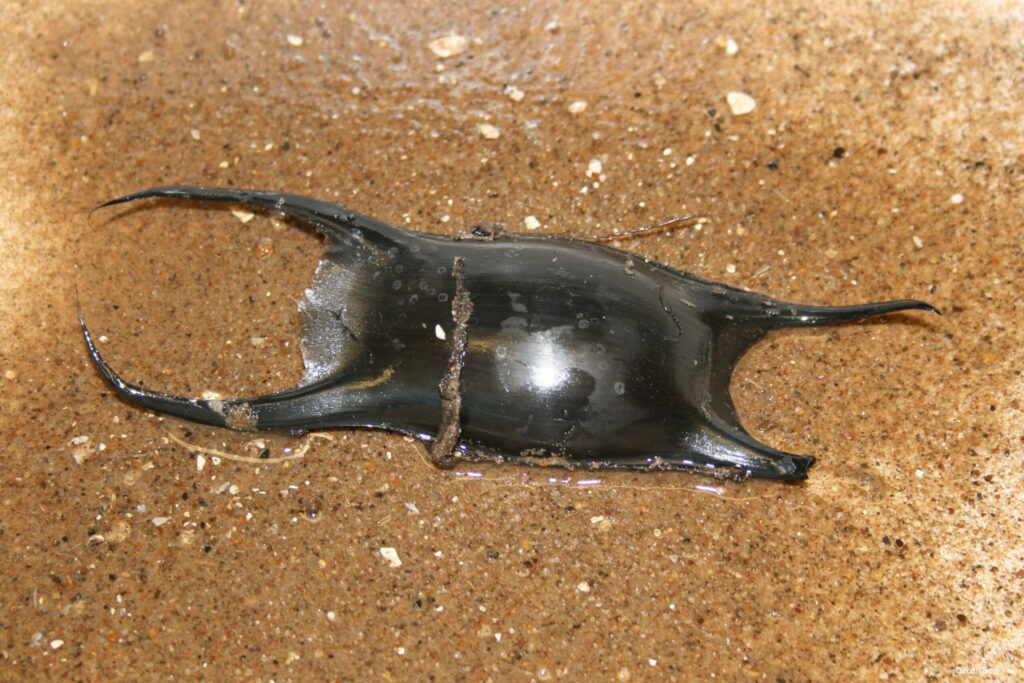
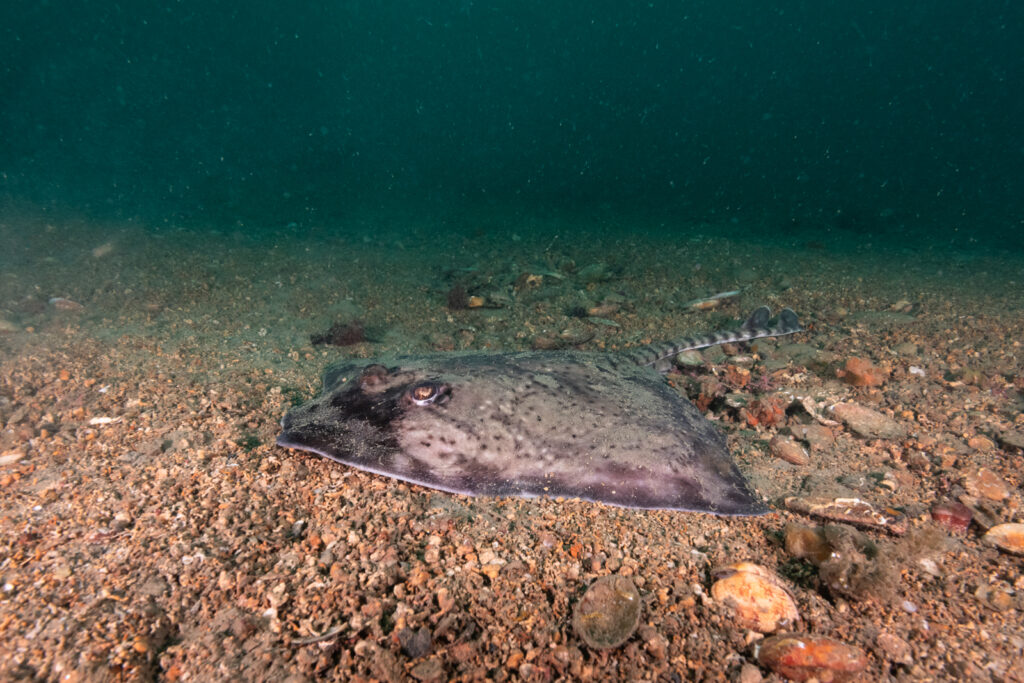
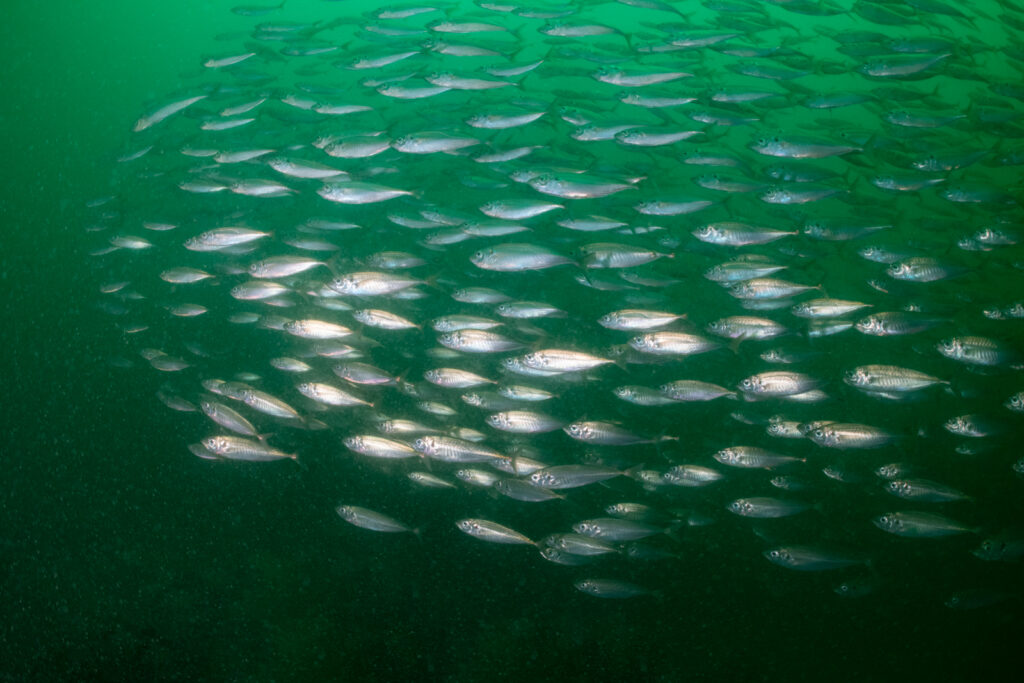
“The numbers vary by species. Large, long‑lived, vulnerable species have structurally declined, and smaller species like sand eel, herring, and mackerel have been overfished at times. Short‑lived species can recover more quickly, but mackerel is currently doing poorly. A century ago, the North Sea was far richer in fish. There were many more large predators like cod, sturgeon, and various shark species. Today, the European sturgeon has almost disappeared from the North Sea, and certain shark and ray species, such as the skate, have declined sharply.”
What’s life like for fish in the North Sea?
“The North Sea is enormous; it is a highly varied and beautifully mysterious natural area. Some species swim only in the upper layers, others only near the seabed. Some alternate between sea and rivers. Their life cycles differ greatly: some stay relatively in one place, while others travel long distances between spawning grounds, nurseries, and feeding areas.
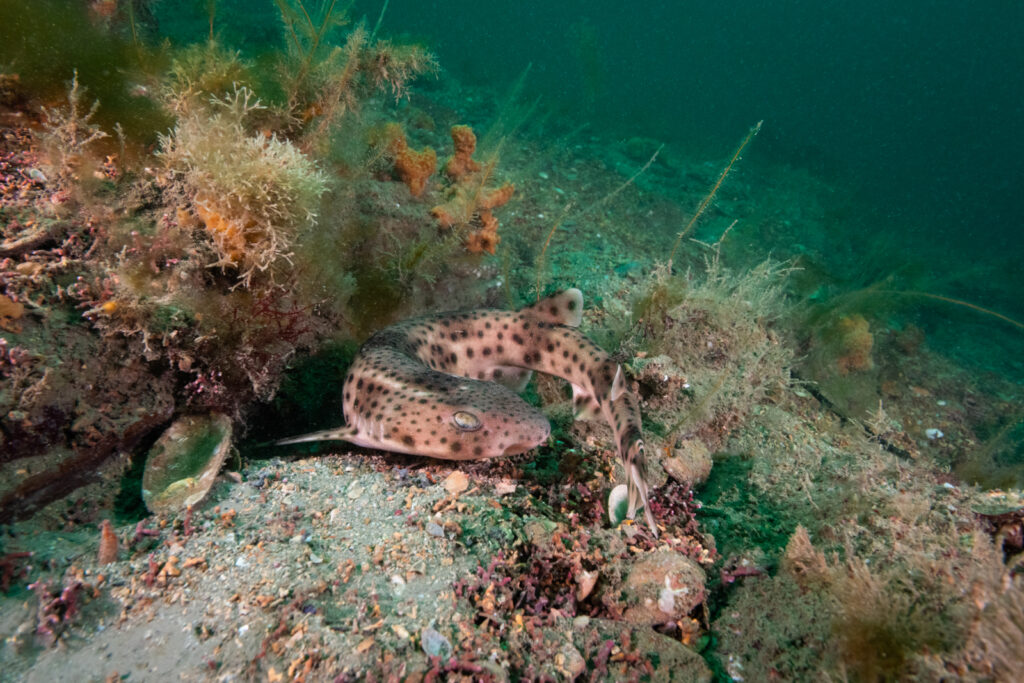
A good example is the spiny dogfish, which occurs throughout the North Sea and is regularly observed in Dutch waters. These sharks travel thousands of kilometers each season in search of food and suitable habitat. They grow slowly, mature only after ten to fifteen years, and produce few offspring — which means their populations recover very slowly.
Or take the European eel, which has one of the most remarkable life cycles in the world. Eels are born in the Sargasso Sea in the Atlantic Ocean, drift thousands of kilometers as tiny larvae to Dutch rivers, ditches, and coastal waters, grow up there, and then swim thousands of kilometers back to the ocean to reproduce. They depend not only on healthy seas but also on well‑connected river systems.”
What are the biggest threats to fish in the North Sea?
“Many species are on the decline, and the causes are all linked to human activity: long‑term intensive fishing, seabed disturbance, pollution, habitat loss, barriers for migratory fish, climate change, and the arrival of invasive species. The North Sea is changing rapidly: warming waters shift food availability, causing some species to move northward while others struggle to adapt.”
How does we bend the downward curve upwards for fish?
“Our approach is to map the key habitats for each fish category, especially spawning grounds, nursery areas, and early‑life habitats. Human impact is greatest when fish are in these vulnerable early stages. If we strengthen these environments, more young fish can grow to adulthood.
We enhance these areas with targeted measures, such as adding shelter or food sources by restoring kelp or seagrass. If we optimize these key areas, more small fish grow larger, and populations increase. That also means more food for predators, seabirds, and marine mammals. We also restore reefs, which form an ecological foundation in the North Sea ecosystem, comparable to forests on land.”
With which projects?
soon. From Zeeland to the Wadden Sea, we’re mapping where species spawn and grow. In the Voordelta, we placed tree‑reef structures on the seabed so herring and other species could lay eggs on them. Only cuttlefish used them enthusiastically, herring unfortunately didn’t, so we’re exploring other options.
We also have the ECOMUG project in the Kiel Fjord in northern Germany. Researchers test underwater structures where young fish can live, which can easily be attached to wind turbines and drilling platforms. It’s a great example of how shelter alone can help fish larvae grow successfully.”
What are key success factors in these projects?
“Minimal human disturbance at pilot sites. And time and space for fish populations to recover. It helps enormously that policy makers, scientists, and the offshore sector work together within Nature Regeneration North Sea. It helps us to move quickly.”
If you could implement one dream measure for the North Sea, what would it be?
“Massive floating platforms across the North Sea, with breeding sites for birds and hanging structures full of oysters, kelp, and mussels. I think that would not only give fish populations but the entire ecosystem an enormous boost.”