Tree Reefs: biodegradable reefs
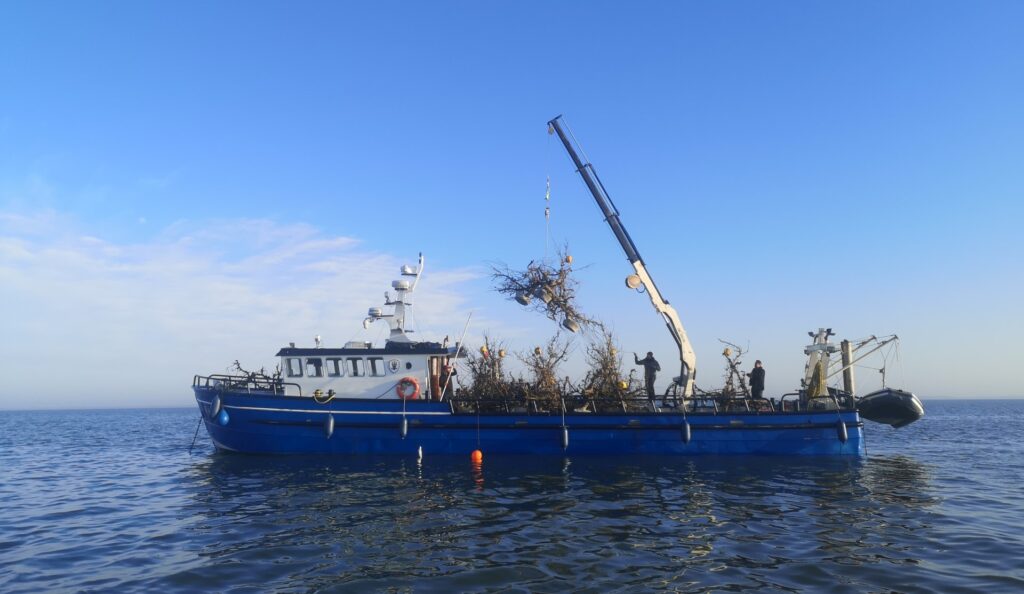
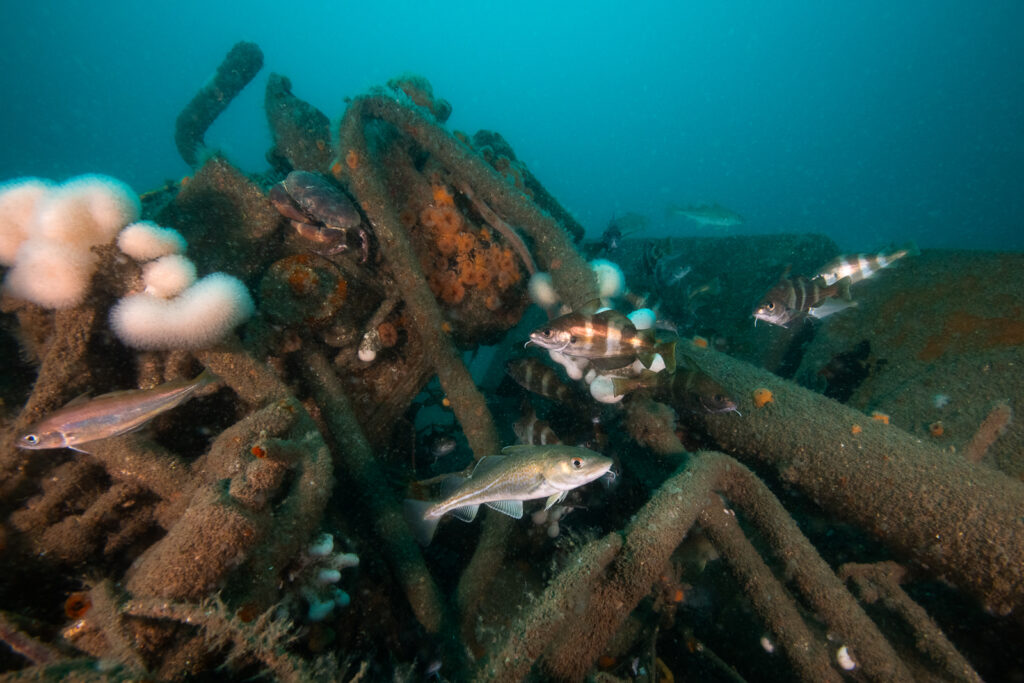
The biodiversity in the North Sea is disappearing at an alarming rate. Artificial reefs can offer a solution to restoring marine life. Such reefs provide an attractive location for all kinds of sea creatures on the otherwise sandy seabed. Bottom-dwellers (benthos) return, which attracts fish that shelter, find food and reproduce there. And those fish, in turn, attract birds. All living creatures in and above the North Sea benefit from healthy reefs. This project investigates the potential of artificial reefs made from pear trees.
Why Tree Reefs?
Tree Reefs are a smart alternative to traditional artificial reefs. These discarded fruit trees are inexpensive and biodegradable. Their shape makes them better able to withstand currents, and their branches are attractive shelters for fish, crustaceans and other marine life.
The research
The project’s goal is to further develop and test the Tree Reef concept as a sustainable way to strengthen biodiversity at sea. The project will progress through four phases:
-
Design
An improved version of the existing Tree Reef concept will be developed. The new design must be less expensive and simpler to deploy from various vessels. It must remain stable and always land in the correct position. -
Location selection The most suitable location for deployment will be determined. This considers ecological and hydrodynamic conditions, as well as logistical and permitting requirements.
-
Deployment and monitoring
Tree Reefs will be deployed at low cost and with minimal CO2 emissions, using ships already sailing there (vessels of opportunity). The effect on biodiversity will be monitored through eDNA analyses, camera footage, trap catches and sonar measurements, among other things. -
Evaluation
The results will be compiled. What are the effects on biodiversity and what is the lifespan of the Tree Reefs? This will lay the foundation for large-scale application.
Partners
The Royal Netherlands Institute for Sea Research (NIOZ) is leading this project, with funding from Nature Regeneration North Sea.