Kelp Rewilding
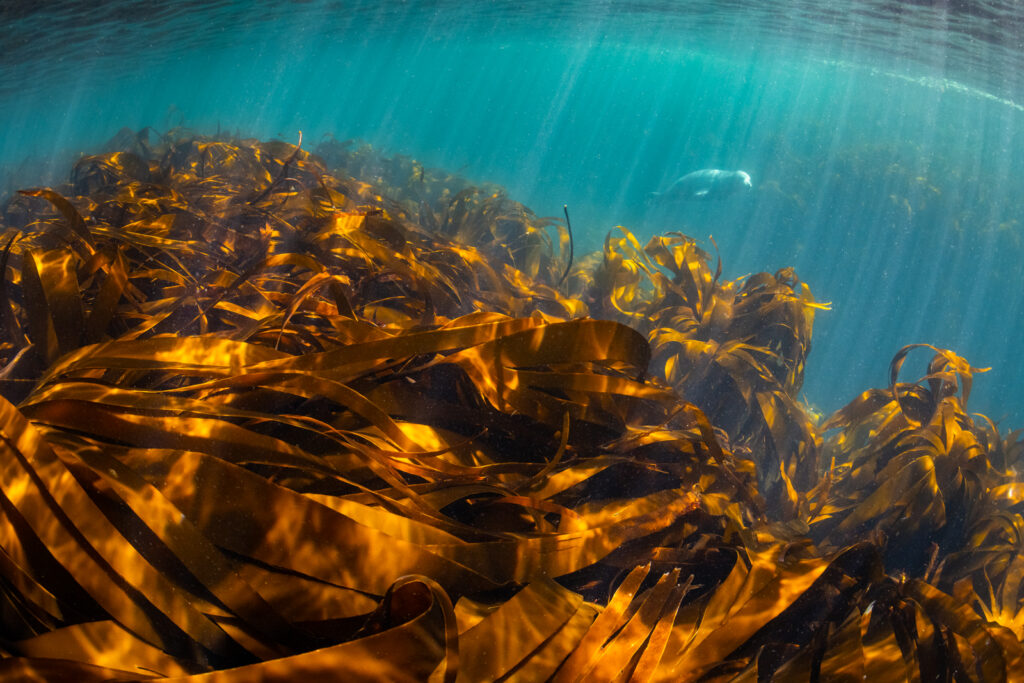
Kelp is a type of seaweed belonging to the brown algae family. It grows with incredible speed: up to half a meter a day. These submerged forests are hotspots for biodiversity and provide food for fish, shellfish, and many other marine species. Kelp grows in shallow water, where it filters, store CO₂, and reduces waves which in turn contributes to coastal protection.
The Research
With this innovative pilot project, Ebbing Tides explores how kelp can help strengthen marine ecosystems. They work together with partners such as Wageningen Marine Research, SEAWISER, and Campus@Sea.
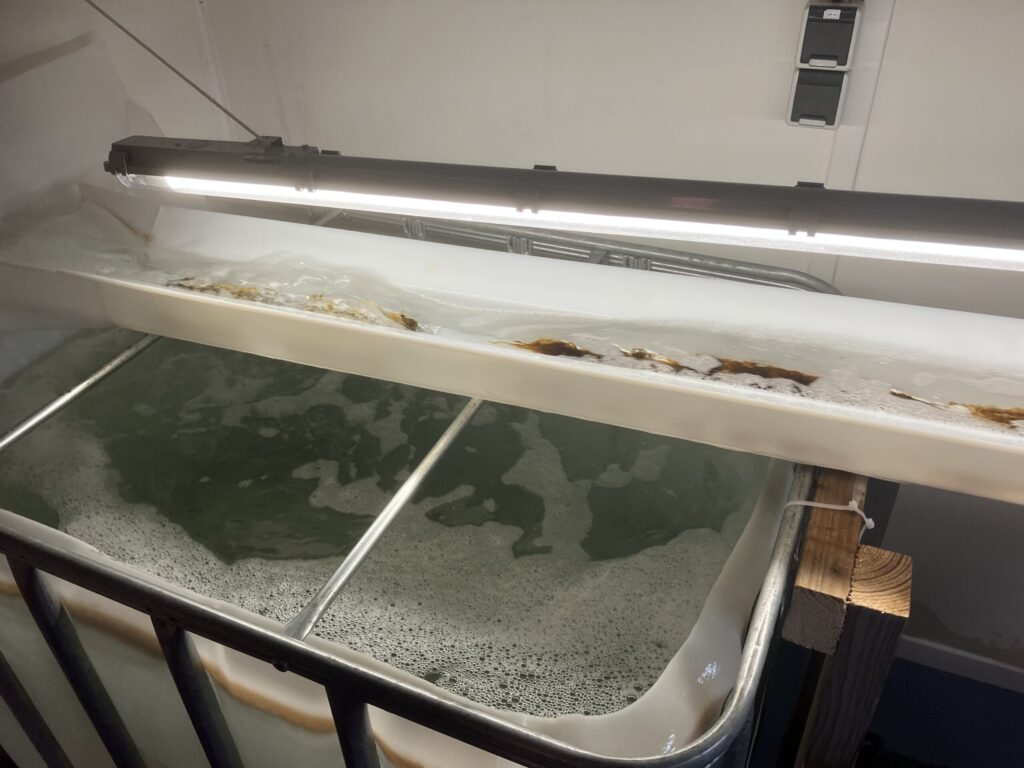
In a laboratory environment, researchers successfully attached kelp to small stones (greengravel). Their research focuses on how kelp develops under these conditions and how factors such as water flow, light intensity, and available nutrients influence growth. The project starts off with controlled lab experiments using flow channels and will later continue at several test locations. Successful methods for sowing kelp and helping it to settle are also closely monitored.
Kelp as a nature-enhancing measure
Dutch research into kelp is still in its early stages. Therefore, this project is emblematic of our learning-by-doing approach: through innovative experiments, we explore whether kelp can be an effective nature-enhancing measure along the Dutch Coast. The insights we gain will also be shared internationally to support the recovery of underwater ecosystems in other seas.
Partners
This project is carried out by Ebbing Tides, Wageningen Marine Research, SEAWISER, Campus@Sea, and Mecal, with funding from Nature Regeneration North Sea.